
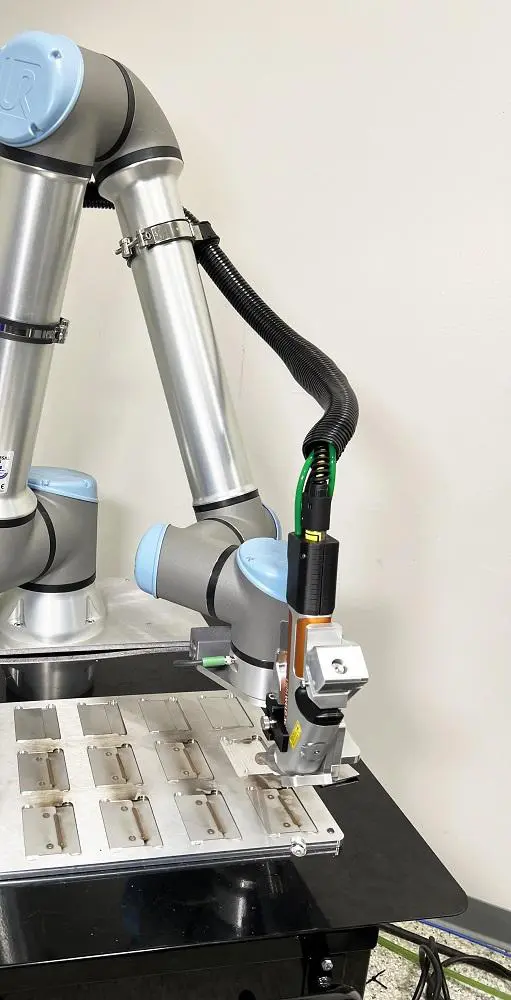
Laser Welding Robots vs MIG Welding: The Future of Precision Fabrication
Manufacturing is evolving fast, and laser welding robots are stepping into the spotlight as a next-generation solution for high-precision metal fabrication. While traditional MIG welding has long been the backbone of the industry, laser technology is redefining what’s possible in terms of speed, accuracy, and material performance.
What Is Robotic Laser Welding?
Robotic laser welding uses a concentrated beam of light to fuse metals with extreme precision. Paired with automation, it delivers consistent, repeatable welds with minimal human intervention. This makes it especially valuable in high-volume production and applications where quality cannot vary from part to part.
Laser Welding vs MIG Welding: Key Differences
1. Precision and Weld Quality
MIG welding is reliable and versatile, but it introduces more heat into the material, which can lead to spatter, larger weld beads, and post-cleanup. Laser welding, by contrast, produces clean, narrow welds with little to no finishing required. Think of it as swapping a paint roller for a precision spray gun.
2. Heat Input and Material Distortion
MIG welding generates significant heat, which can warp thinner materials like stainless steel or aluminum. Laser welding uses low heat input, reducing distortion and preserving the integrity of delicate parts.
3. Speed and Efficiency
Laser welding systems can operate at higher speeds with less downtime for cleanup or rework. While MIG welding remains efficient for many applications, laser systems shine in high-throughput environments where consistency is critical.
4. Material Capability
Both methods can handle a range of metals, but laser welding excels with stainless steel, aluminum, and even dissimilar metals. This opens the door to more advanced fabrication possibilities.
5. Automation and Repeatability
Robotic MIG welding already improves consistency, but laser welding takes it further with ultra-precise control and minimal variability between cycles.
Why Manufacturers Are Paying Attention
With ongoing skilled labor shortages and rising quality demands, manufacturers are looking for ways to do more with less. Robotic laser welding reduces reliance on manual processes, cuts down on rework, and increases throughput—all while delivering superior weld quality.
For many shops, MIG welding will remain a core process. But for high-precision, clean-finish, and thin-material applications, laser welding is quickly becoming the preferred choice.
The Plan B Metalworks Advantage
At Plan B Metalworks, we already leverage robotic welding to deliver consistent, high-quality results across a wide range of fabrication projects. Now, we’re looking ahead.
We are actively exploring the addition of a robotic laser welding system to expand our capabilities in stainless steel and aluminum workloads. This next step will allow us to offer even tighter tolerances, faster turnaround times, and cleaner finishes—without sacrificing the reliability our customers depend on.
Final Thoughts
MIG welding built the foundation of modern fabrication. Laser welding is sharpening the edge.
For manufacturers looking to stay competitive, the question isn’t if this technology will play a role—it’s when.