
Robots Just Beat Humans in a Half Marathon. That’s Not the Story.
If you just read the headline, it sounds like a novelty: A humanoid robot ran a half marathon in Beijing… and beat the human world record. But that’s not the story.
The story is how fast this happened. In 2025, the best humanoid robot took over 2 hours and 40 minutes to finish the same race. Many didn’t finish at all. In 2026, the winning robot crossed the line in 50 minutes and 26 seconds — faster than the best human ever recorded.
That’s not progress. That’s a technological jump cut…. Stumbling to Sprinting in 12 Months
This wasn’t one machine in a lab. Over 100 robotic teams entered with nearly half ran autonomously. Many outpaced human runners entirely.
Last year, robots were falling over, overheating, and struggling to complete the course. This year, they ran with balance, stride, and efficiency that spectators described as shockingly human-like.
Some still crashed. A few needed help. One took a spill near the finish. But that’s almost beside the point. Because the baseline has shifted.
What This Actually Proves A half marathon is not just a race. It’s a stress test. To complete it, a robot has to maintain balance over 21 km. Manage heat and power consumption while navigating the course simultaneously adapt to terrain. How many thousands of precise movements… In other words, it has to operate in the real world — not a controlled factory cell. And now, it can. Once a machine can reliably move, adapt, and endure like this, the controlled environment of manufacturing becomes the easy part.
This event wasn’t just about speed, robots in the same ecosystem are now:
- Performing delicate tasks like sorting objects and handling cluttered environments
- Being trained on real-world data from chaotic human spaces
- Moving from demonstrations into early-stage deployment
Governments are investing. Companies are scaling production. Entire supply chains are forming around this shift.
Even today, China accounts for the majority of humanoid robot deployments globally, with production ramping rapidly.
This isn’t experimental anymore. It’s industrial. What This Means for Manufacturing Here’s the part that gets missed. We don’t need robots to run marathons in a welding shop. We need them to do the same weld, perfectly, every time. And compared to running 21 kilometers on uneven terrain? That’s a much simpler problem.
The real takeaway is this: If robots can now handle dynamic, unpredictable environments, then structured, repeatable manufacturing tasks are already well within reach — and improving fast.
Where Plan B Metalworks Fits. At Plan B Metalworks, we’re not waiting for the future to show up. We’re already using robotics where it makes sense:
- Repeatable welds
- Consistent quality
- Scalable production without massive capital investment
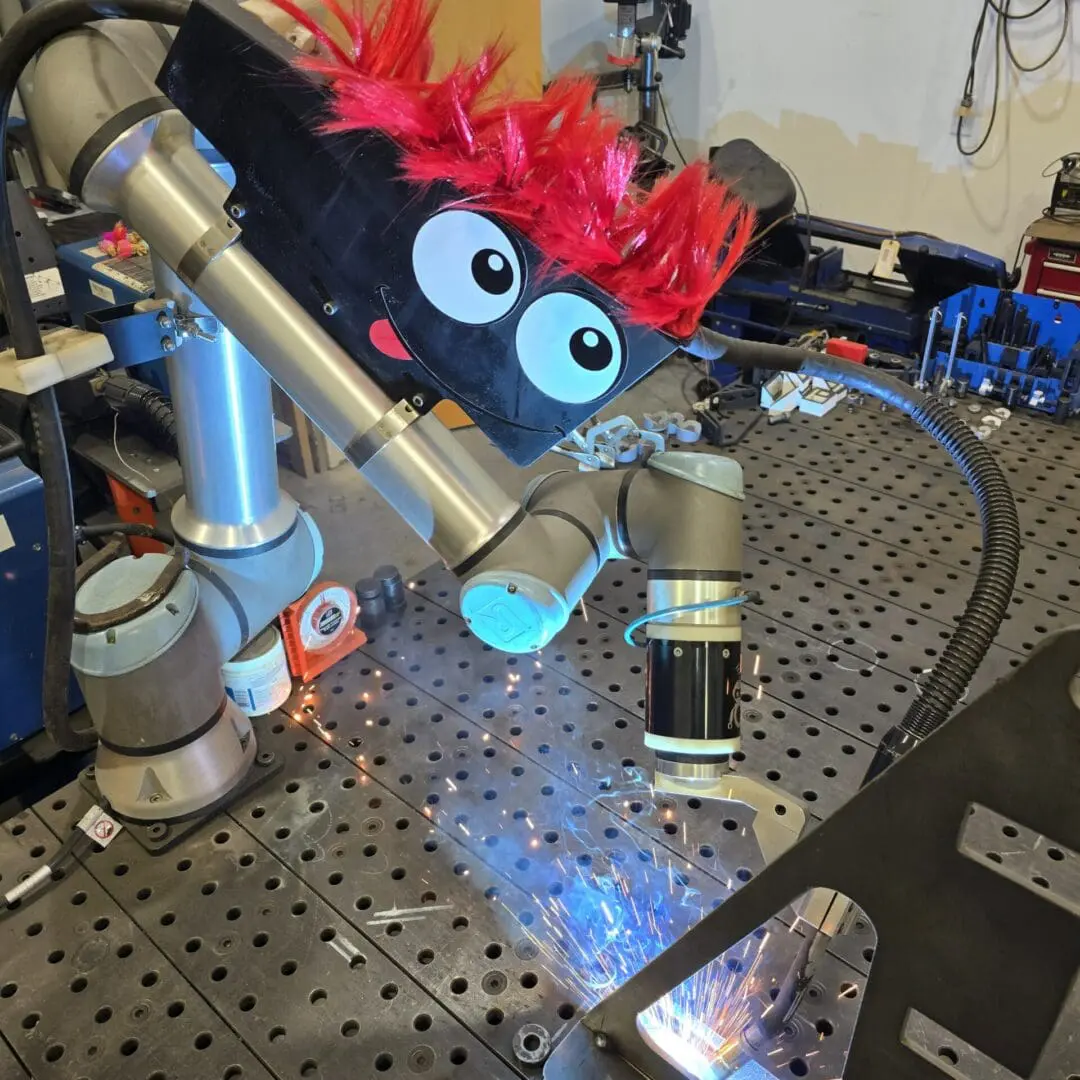
No hype. Just results. Because while some robots are out there breaking race records… Ours are in the shop — laying down welds that don’t trip, don’t crash, and don’t miss a bead.