
The Future of Manufacturing: Is Canada Ready?
For years, advanced robotics in manufacturing felt like something reserved for science fiction, giant automated factories, autonomous systems, and intelligent machines doing work once thought possible only by skilled hands. Today, that future is no longer on the horizon. It’s here, and it’s accelerating fast.
Around the world, manufacturers are embracing a new era of production powered by robotics, AI, automation, and connected systems. Welding robots can adapt in real time. Inspection systems can instantly identify defects. Production cells can communicate with each other and optimize output on the fly. Factories are becoming smarter, faster, and more efficient than ever before.
And while countries like South Korea, Germany, Japan, and increasingly China are racing ahead in automation adoption, Canada is still playing catch-up. Canada ranks well behind the world’s most automated manufacturing nations in robot density, a key measure of automation adoption, and trails many developed economies in deploying advanced manufacturing technology at scale. Even Western Europe now significantly outpaces North America in manufacturing robot density.
That gap matters.
Countries investing heavily in automation are building more competitively, producing with greater consistency, and becoming less dependent on increasingly scarce skilled labor. They are creating factories designed for the next 25 years, while many Canadian manufacturers are still operating with models built for the last 25.
But there is opportunity in that gap.
Canada has world-class tradespeople, strong engineering talent, and a manufacturing sector that has always been adaptable. The companies that begin investing in robotics, automation, and AI-assisted production today will be the ones positioned to lead tomorrow. The shops that wait may find themselves competing with one hand tied behind their back.
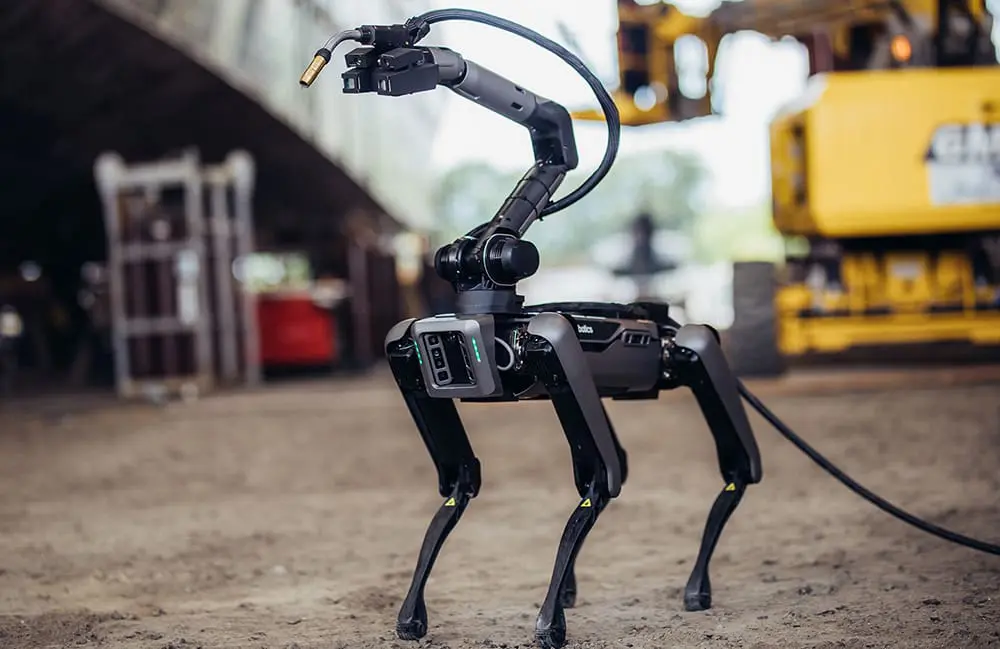
This is where Plan B Metalworks comes in. At Plan B Metalworks, we see robotic welding not as some distant futuristic idea, but as practical manufacturing happening right now. Automation is no longer just for billion-dollar factories or global shipbuilders. It’s available to local manufacturers, fabrication shops, and production companies that want better throughput, consistent weld quality, and more capacity without adding pressure to an already stretched workforce.
The future shop floor will still need skilled people, but their tools will be smarter. Their output will be greater, and their competition will be global.
Science fiction? Not anymore. The future of manufacturing is already here. The question is, will Canada build it, or buy it from someone else?