
AI in Industrial Robotics: From Automation to Decision-Making
Step into a fabrication shop today and you’ll still see robotic arms welding, cutting, and moving steel. But look closer. They’re no longer just following instructions—they’re starting to make decisions.
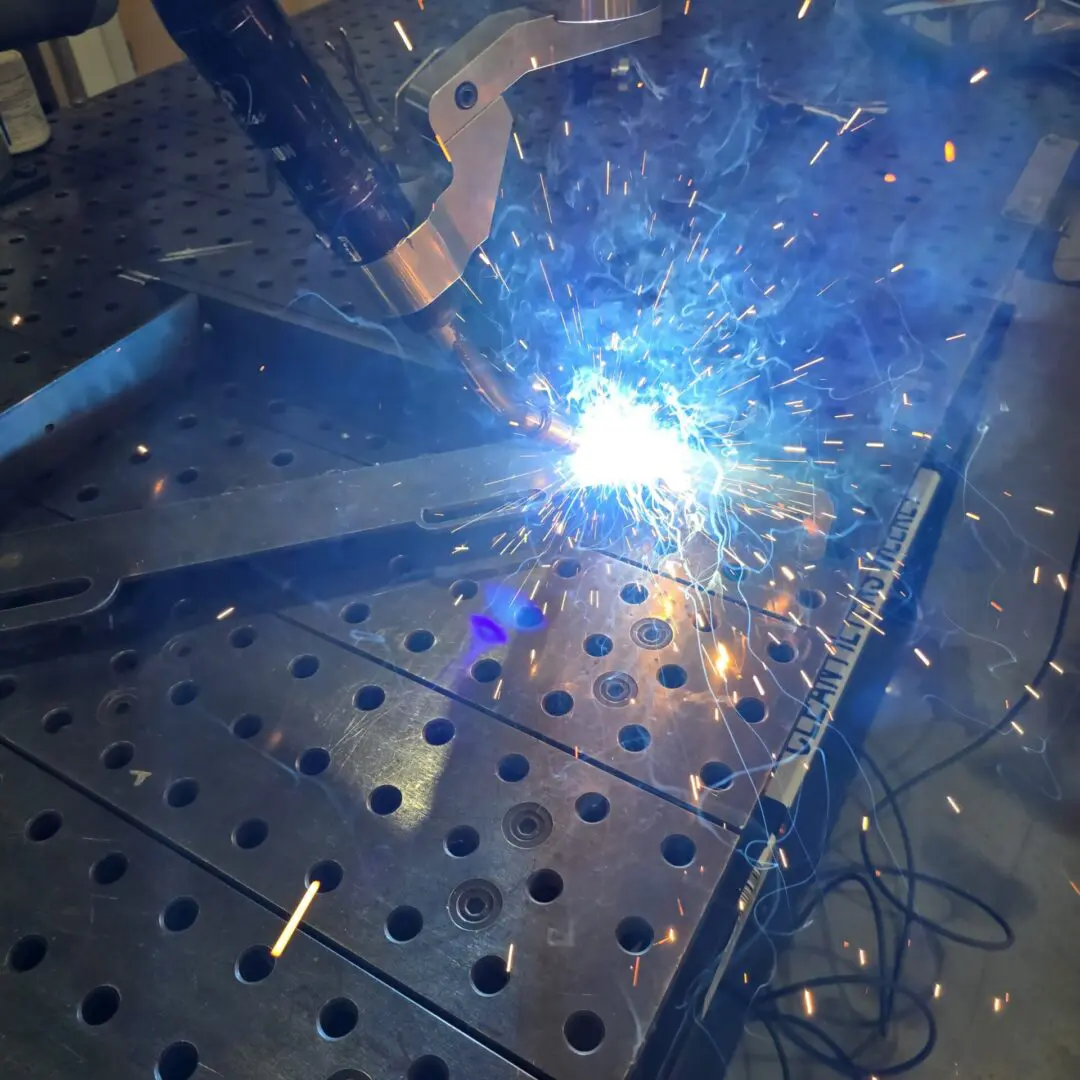
This shift is being driven by a new layer of technology: AI in industrial robotics. And it’s changing everything from robotic welding to custom metal fabrication.
From Programmed Robots to Thinking Systems
Traditional industrial robots were built like recipe followers:
- Execute a path
- Repeat it perfectly
- Stop when something goes wrong
That worked—until real-world variability showed up. AI flips that model. Instead of rigid instructions, robots are now: Assessing their environment, deciding what action to take next and adjusting in real time to changing conditions
In simple terms, they’re moving from “do this” to “figure it out and get it done.”
What Is AI (and Why It Matters)?
AI allows robots to operate with goal-driven intelligence. Rather than being programmed step-by-step, they can interpret tasks from high-level instructions. Plan how to complete tasks then execute, adjust as conditions change.
These systems can perceive, reason, and act toward a goal with minimal oversight—something traditional automation simply couldn’t do.
For industries like: metal fabrication…this is a massive leap forward.
Real Impact on Welding and Fabrication
In welding environments, variability is constant: Material thickness changes, Fit-up isn’t always perfect, Heat distortion affects consistency, the list is endless. Older systems struggle here. AI-driven robots don’t. They can adjust when parts are slightly off then Identify defects and determine pass/fail quality on their own. In fact, inspection and quality control are some of the first areas where AI-driven decision-making is already outperforming traditional workflows.
Smarter Cobots on the Shop Floor
Collaborative robots (cobots) are where this technology really comes alive. Instead of being locked behind cages, cobots work alongside operators adding AI, they can even learn via interpreting procedures and manuals into action plans. This turns expert knowledge into something repeatable and scalable across production.
The Rise of Decision-Making Robots
Here’s the real turning point. Robots are no longer just tools—they’re becoming decision-makers. Instead of; Welding a part → human checks quality a traditional approach. We now have, Robot welds → robot inspects → robot decides next step
That closed loop means faster production and consistent output, ultimately, a smarter manufacturing process.
The Competitive Advantage for Manufacturers
Across Canada and the U.S., manufacturers are dealing with: labor shortages, timelines, cost control, geopolitical pressure…
AI-driven robot offers a clear edge:
- Consistency at scale
- Reduced downtime and scrap
- Faster adaptation to new jobs
This isn’t about replacing skilled workers—it’s about amplifying their impact.
Where Plan B Metalworks Fits In
At Plan B Metalworks, this evolution isn’t theoretical—it’s practical. By combining: robotic welding, LEAN Strategies and experience. We deliver high-quality workmanship
From brackets to structural components, the goal is simple: get it right, every time—no matter the variability.
The Bottom Line
Industrial robotics is entering a new phase. Not just faster. Not just more precise. But smarter. AI is turning robots into systems that don’t just execute work—they understand it, adapt to it, and improve over time.