
Canada’s Productivity Problem and Why Robotic Welding Is Part of the Solution
Working Harder Isn’t the Answer
Canadian workers have never been afraid of hard work. Yet despite the effort being put in across the country, Canada’s productivity growth continues to lag behind many of our competitors.
The conversation around productivity often focuses on people, but the real issue is not how hard employees work. The issue is whether businesses are providing the tools, technology, and systems that allow employees to produce more value with the same amount of effort.
In manufacturing, this challenge is becoming increasingly visible. Companies are facing labour shortages, rising costs, and growing pressure to deliver products faster than ever before. Adding more labour is often difficult, expensive, or simply not possible.
At some point, every manufacturer faces the same question:
How do we increase output without increasing headcount?
The Productivity Challenge in Manufacturing
For decades, Canadian manufacturers have competed by relying on skilled tradespeople, strong work ethics, and quality craftsmanship. Those strengths remain important today.
However, manufacturers are now dealing with several challenges at the same time:
- Skilled labour shortages
- An aging workforce
- Rising wages and benefit costs
- Increasing customer expectations
- Global competition from lower-cost producers
These pressures make productivity more important than ever.
Productivity is not about asking welders to work longer shifts or move faster. Productivity is about removing waste, reducing bottlenecks, and leveraging technology to increase throughput.
Why Welding Often Becomes the Bottleneck
Many manufacturing operations discover that welding is one of the most difficult areas to scale.
Finding experienced welders can be challenging. Training new welders takes time. Production schedules become vulnerable when key employees are unavailable.
As order volumes increase, welding frequently becomes the bottleneck that limits overall production capacity.
This is where robotic welding can make a significant difference.
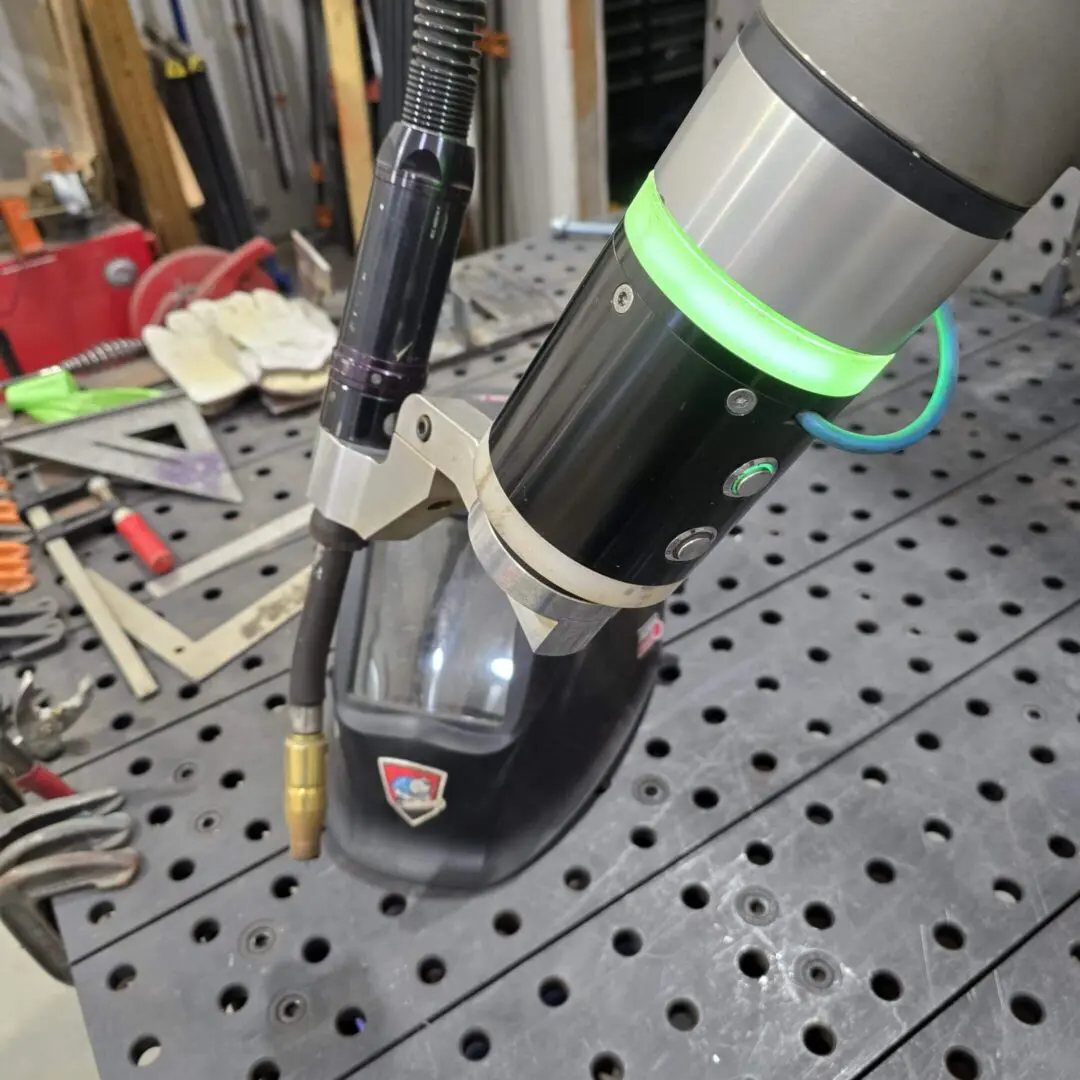
Robotic Welding Creates Capacity
Robotic welding is not about replacing skilled workers. It is about allowing skilled workers to focus on higher-value tasks while repetitive production welding is completed consistently and efficiently.
The benefits include:
Increased Throughput
Robotic systems can weld the same part repeatedly with consistent cycle times, helping manufacturers produce more parts without adding labour.
Improved Quality
Robots perform the same weld path every time, reducing variation and improving consistency.
Reduced Rework
Consistent weld quality means fewer defects, less grinding, and less time spent correcting issues.
Better Labour Utilization
Skilled welders can focus on setup, quality control, custom fabrication, and process improvements instead of repetitive production work.
Predictable Production
Manufacturers gain more certainty in scheduling and delivery performance.
How Plan B Metalworks Helps Manufacturers Improve Productivity
At Plan B Metalworks, we work with manufacturers that need additional welding capacity but don’t want the cost and complexity of investing in their own robotic welding system.
Our robotic welding services allow customers to:
- Increase production capacity
- Reduce labour-related bottlenecks
- Improve weld consistency
- Support Kanban and replenishment programs
- Scale production without increasing headcount
Many of our customers use us as an extension of their manufacturing operation. Instead of worrying about welding capacity, they can focus on sales, assembly, and serving their customers.
The Future Belongs to More Productive Manufacturers
Canada’s productivity challenge will not be solved by asking people to work harder. It will be solved by helping people work smarter through better processes, automation, and innovation.
Manufacturers that invest in productivity today will be better positioned to compete tomorrow. Whether through automation, lean manufacturing, continuous improvement, or robotic welding, the goal remains the same:
Produce more value with the resources you already have.
At Plan B Metalworks, we believe robotic welding is one of the most practical ways manufacturers can increase productivity, improve quality, and address ongoing labour shortages.
If welding capacity is limiting your growth, let’s talk about how robotic welding can help remove the bottleneck.