
The Rise of Robot Welding: What It Means for Modern Manufacturing
Manufacturing is entering a new era where industrial welding and automation are becoming tightly connected. Across fabrication shops and manufacturing plants, robot welding technologies are rapidly evolving, helping companies deal with skilled labor shortages while improving quality and production efficiency.
Recent developments in the industry highlight how automation is reshaping welding operations and what manufacturers can expect in the years ahead.
Leadership and Innovation Driving Robot Welding Forward
Automation providers continue to invest in robotic welding solutions as demand accelerates. For example, the automation company Hirebotics recently appointed co-founder Matthew Bush as CEO, reflecting strong momentum in the welding automation sector. The company has focused on collaborative welding robots that allow fabricators to automate welding tasks without complex programming.
These systems combine welding equipment, robotic arms, and easy-to-use software so welders can quickly program and operate automated welding processes. The goal is not to replace welders, but to help shops produce more with the skilled people they already have.
This approach reflects a broader trend: manufacturers increasingly look for robot welding services or automation partners who can help integrate robotics into real-world production environments.
Why Robot Welding Is Growing So Quickly
The growth of robot welding is being driven by several major pressures in the manufacturing sector.
1. Skilled Welder Shortages
Industry forecasts estimate that hundreds of thousands of new welders will be needed in the coming years to meet demand. Robotic welding systems help fill this gap by automating repetitive welds while allowing skilled welders to focus on more complex work.
2. Consistent Quality
Manual welding is highly dependent on operator skill and fatigue levels. Robotic systems produce consistent welds repeatedly, reducing variation, defects, and rework.
3. Increased Productivity
Automation allows welding systems to operate continuously and maintain higher arc-on time compared with manual welding, which dramatically improves throughput and production efficiency.
These advantages make robot welding services particularly valuable for manufacturers dealing with fluctuating production volumes or tight delivery schedules.
Technology Advancements Transforming Industrial Welding
The latest generation of robotic welding technology is far more capable than early automation systems. Several innovations are expanding what is possible in industrial welding automation.
AI-Assisted Welding
Artificial intelligence is beginning to optimize welding parameters automatically. Systems can analyze weld quality and adjust settings such as travel speed or arc parameters to improve results.
Seam Tracking and Adaptive Welding
Modern robots can use sensors or laser scanning to detect joint position and adjust the torch path in real time. This allows robotic welders to compensate for part variation or imperfect fit-up during production.
Flexible Cobot Welding Systems
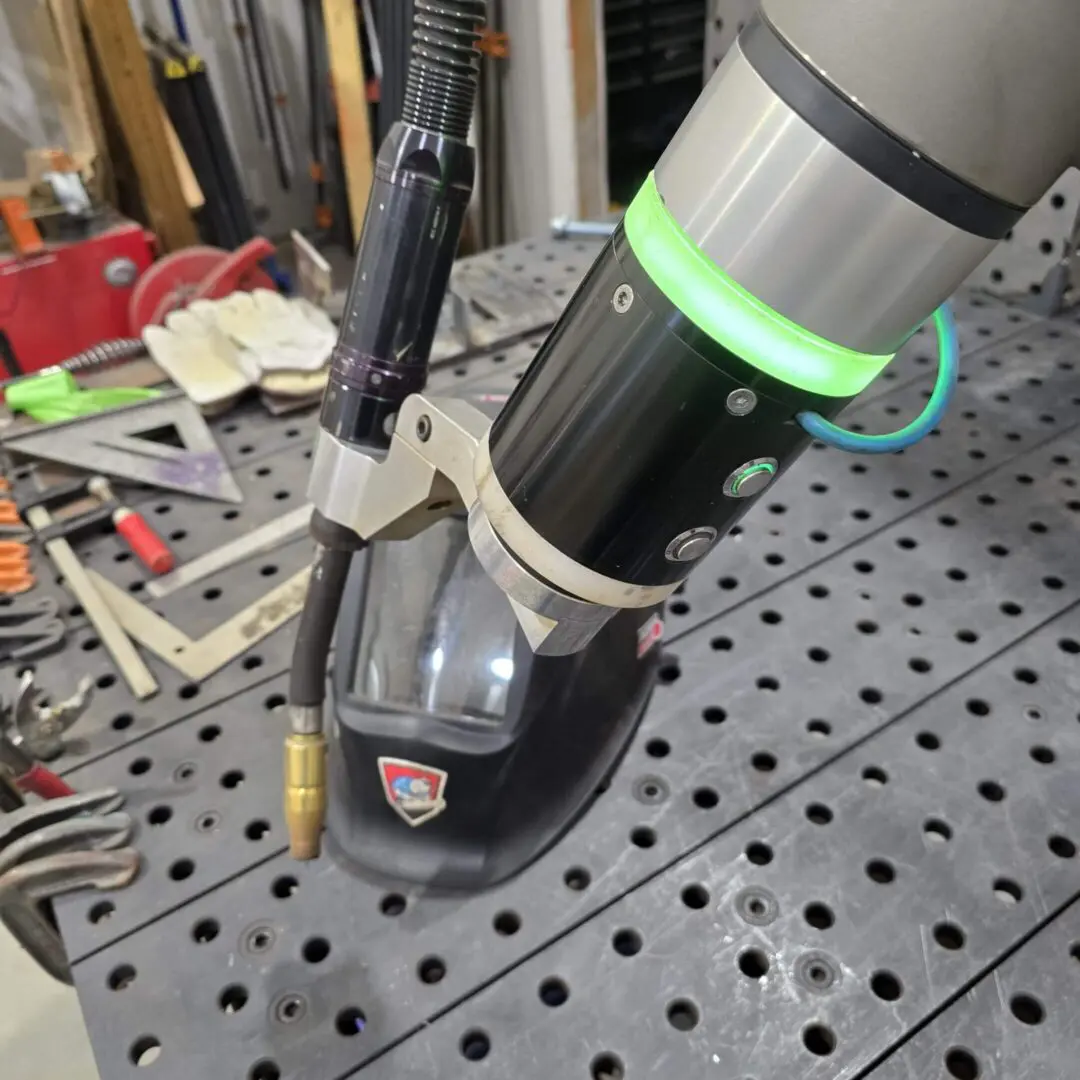
Collaborative robots, often called cobots, are smaller and easier to deploy than traditional robotic welding cells. They can be moved between workstations or even mounted directly on equipment to weld large assemblies.
These technologies are helping manufacturers apply automation in industries that previously relied almost entirely on manual welding.
The Role of a Welding Partner in Automation
While robotic systems are becoming easier to deploy, successful automation still requires planning and expertise. This is where a robot welding partner or service provider becomes valuable.
A strong welding partner can help, at Plan B Metalworks, the focus is simple: help manufacturers make robotic welding practical.
Instead of asking customers to redesign their entire operation around automation, Plan B Metalworks works as a robot welding partner that provides robotics welding services.
The approach focuses on:
- Demonstrate that low or high-volume mix can work well with cobot welding
- Maintaining strong standards by Delivering consistent, repeatable weld quality
- Applying welding best practices developed specifically for robotic processes
By combining robotic welding technology with real fabrication experience, Plan B Metalworks helps manufacturers improve efficiency.
This partnership approach allows manufacturers to benefit from robotic welding without needing to buy and build an entire automation department internally.
Robot Welding and the Optimization of Production
For many companies, robotic welding is no longer just about replacing manual labor. It is becoming a key tool for optimization of production.
Automation can:
- Reduce cycle times
- Improve consistency and quality control
- Enable better production scheduling
- Minimize scrap and rework
Combined with digital monitoring and production analytics, robotic welding systems allow manufacturers to create a more predictable and efficient fabrication process.
The Future of Welding Automation
Looking ahead, the role of robot welding in industrial manufacturing will only expand. Technologies like AI-driven parameter optimization, digital simulation, and sensor-based quality monitoring are turning welding into a more data-driven process.
For manufacturers willing to adopt these tools, robotic welding offers a path toward higher productivity, stronger quality control, and more resilient production operations.